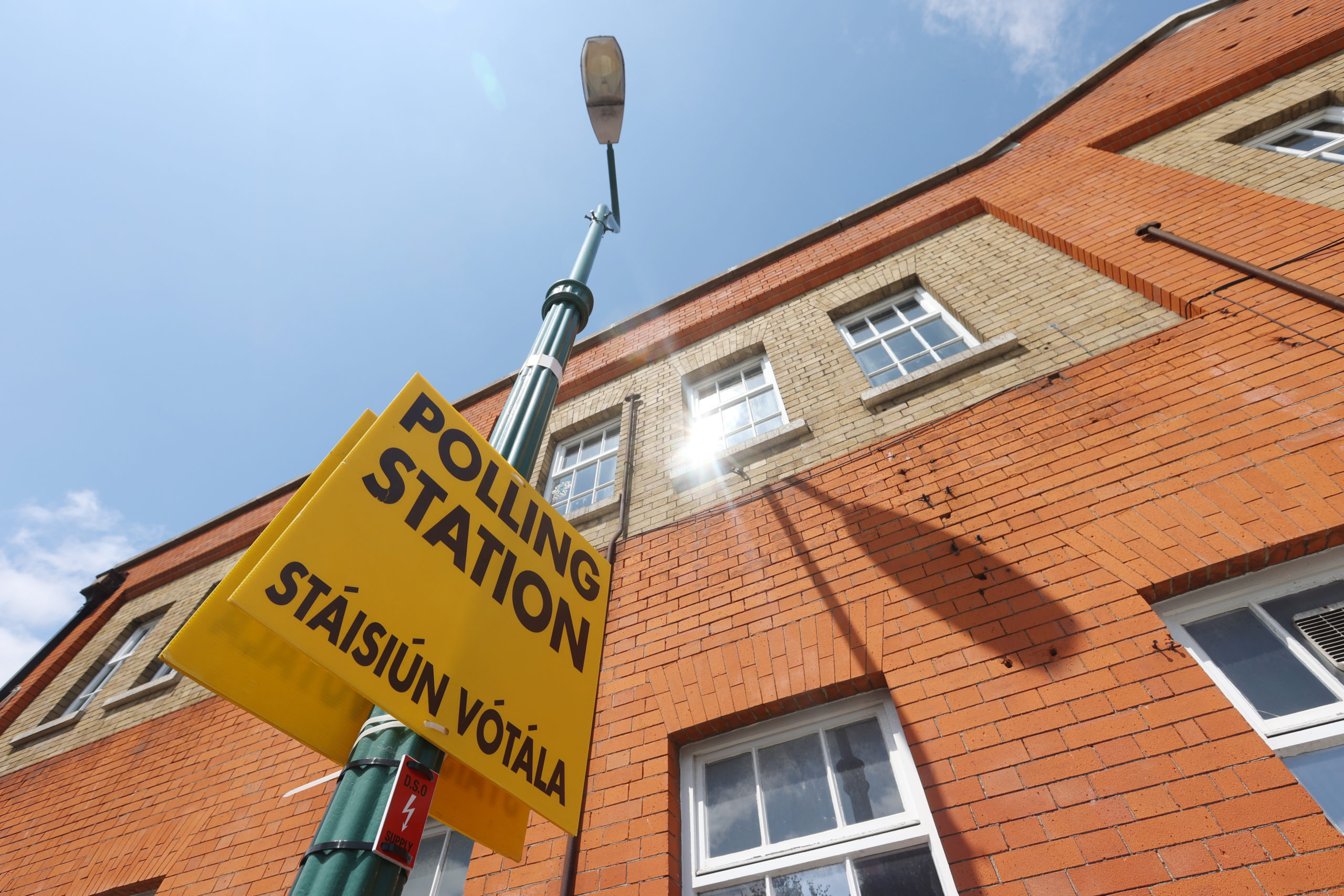
Bye-election
A bye-election is an election to fill a seat that has been vacated in between general or Seanad elections.
There are currently two vacant Dáil seats with the associated bye elections for 1 seat each in the Dublin Central and Galway West constituencies due to take place this Spring.
There is a glossary of terms related to elections on the Glossary of electoral terms – Electoral Commission webpage
What is a bye-election?
A bye-election is an election to elect a new member of the Dáil (TD) by filling a vacant (free) seat in a Dáil constituency between planned elections. This is different to a general election where multiple seats are filled across all Dáil constituencies.
If an elected member of the Dáil (TD) dies, resigns or retires, their seat must be filled within six months. This can be done by means of a bye-election in the constituency where the vacancy occurs, or it can also be filled if a general election is called within the six-month period.
As the next planned general election is not due to take place until the term of the current Dáil ends in 2029, bye-elections are taking place in Dublin Central and Galway West in May to fill two seats in the Dáil that have become vacant.
Why are bye-elections being held now?
Two bye-elections are being held – in Dublin Central and Galway West – to fill Dáil seats that have become vacant (free).
A seat has become vacant in Galway West due to the election of Catherine Connolly as President on 25 October 2025, who was a TD for that constituency.
A seat has become vacant in Dublin Central due to the resignation of Paschal Donohue on 18 November 2025, who was a TD for that constituency.
When a TD dies or resigns, the Dáil passes a resolution directing the returning officer of the TD’s constituency to hold an election to fill the vacancy. The Dáil issues a writ (a legal order) to the returning officer to hold an election. Under electoral law the writ must be issued to the returning officer within six months of the death, resignation or retirement of the TD.
Where are the bye-elections being held?
Dáíl bye-elections will be held in just two constituencies – Dublin Central and Galway West.
These bye-elections are being held to fill two seats that have become vacant in these constituencies.d bring a valid form of personal identification such as a passport, a driving license, a public services card, or an employee or student identity card with a photograph. Other forms of identification are also acceptable. View the full list of documents you can use to prove your identity when voting.
How do I know which constituency I live in?
You can check your constituency on What constituency am I in? – Electoral Commission webpage using your Eircode or address.
Can I vote in the bye-elections?
You can vote in a bye-election if you are:
- Registered to vote – you can check if you are registered to vote here: Check the Register
- An Irish or British citizen
- Aged over 18 on poling day
- Ordinarily resident in one of the two constituencies in which a bye-election is taking place – you can check your constituency here: What constituency am I in? – Electoral Commission
Who are the current TDs in the Galway West Constituency?
There are 5 seats in the Galway West constituency. Since the election of President Catherine Connolly, the four remaining TDs representing the Galway West constituency are (in alphabetical order of surname):
John Connolly, Fianna Fáíl
Mairéad Farrell, Sinn Féin
Noel Grealish, Independent
Hildegarde Naughton, Fine Gael
The bye-election in May will fill the vacant (free) fifth seat.
Who are the current TDs in the Dublin Central Constituency?
There are four seats in the Dublin Central constituency. Since the resignation of Paschal Donohue, the three remaining TDs representing the Dublin Central constituency are (in alphabetical order of surname):
Gary Gannon, Social Democrats
Mary-Lou McDonald, Sinn Féin
Marie Sherlock, Labour
The bye-election in May will fill the vacant fourth seat.
What is the deadline for registering to vote?
Under electoral law, applications to register to vote or amend the register must be received by your local authority 15 days before polling day (excluding Sundays, Good Friday and Public Holidays). This exact date will be set once the writ for the bye-elections is moved but you can register to vote or check your details at any time outside of an election period.
The easiest and quickest way to register is online at www.checktheregister.ie
However, you can also register by using the ERF 1 paper form. This is available on www.checktheregister.ie or from your local authority.
Voter registration is managed directly by each local authority. An Coimisiún Toghcháin does not manage voter registration.
The electoral register for the Dáil constituency of Galway West is managed by Galway City Council and Galway County Council as the constituency spans parts of both local authority areas.
The electoral register for Dublin Central is managed by Dublin City Council.
Checktheregister.ie has a full list of local authority postal addresses
How does the voting process work in a bye-election?
The voting process in a bye-election is the same as in a general election. There will be a number of candidates on the ballot paper for each constituency. When marking your ballot paper start with ‘1’ for your first preference/choice candidate, then ‘2’ for your second preference/choice candidate and so on. You can vote for as many or as few candidates as you wish. This is entirely up to you.
At the election count, the quota is calculated. The quota is the number of votes that a candidate must get to be elected. The counting of votes will take place in line with the rules for the counting of votes as set out in the Electoral Act, 1992
As usually happens at election counts, the number of first preference votes for each candidate will be counted. After this first count takes place, if no candidate reaches the quota, the candidate with the lowest number of first preferences will be excluded and the next preferences of those ballot papers will be distributed among the remaining candidates.
To ensure your vote is counted make sure you mark your preferences/choice as clearly as possible. If you do not want to fill out a preference for all candidates on the ballot paper, the box beside those you are not voting for should be left empty.
To make sure that your vote is not considered invalid, do not make any other mark on the ballot paper.